
Label: Blue Note Records, 2026
Personnel - Nduduzo Makhathini: piano, vocals, vocoder, synth; Dalisu Ndlazi: double bass; Lukmil Perez: drums + Guests - Robin Fassie: trumpet (#1); Shabaka: flute (#5); Omagugu: vocals (#6,14); Ayanda Sikade: drums (#7,16); Muneyi: vocals (#9,11); Keenan Ahrends: guitar (#10); Black Coffee; drum programming (#14); Thando Zide: vocals (#12).
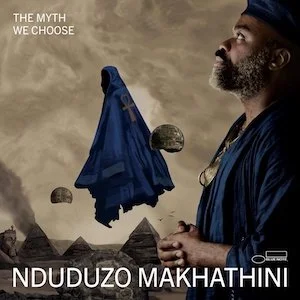
South African pianist and composer Nduduzo Makhathini returns with The Myths We Choose, an album whose music advocates for a better world and greater responsibility toward the future. Working with his South African trio at the core, Makhathini invites a number of relevant guests for a program comprising thirteen original compositions (three of them with reprises). Here, he explores new sounds and genres, with several tracks signaling a shift in mindset while retaining the rooted spirituality that has become his trademark signature.
“Kuzodlula”, a soaring 3/4 ballad inspired by the difficulty of forgiveness, opens the album with a delicate compromise between light and dark tones. Resonant bowed bass turning to pizzicato, Makhathini’s chordal sequences and vocals, understated drumming, and the sultry trumpet work of Robin Fassie form the framework. “Imvunge KaNtu”, a tribute to roots and ancestral wisdom, is deeply ritualistic, encompassing asymmetrical odd-metered fluxes, handclaps, and vocals in praise of the Zulu Kingdom and the murmuring spirit of Ntu.
As a healer, moonscape practitioner, and steward of state-of-the-art Afro-jazz, Makhathini delivers “Liyoze Line Nangakithi” with spiritual transcendence, engaging in lucid improvisational passages while interacting with the digressive, serpentine flute of Shabaka. The piece concludes with incantatory chants over subtle percussive patterns, calling for rain and the immaterial. It pairs beautifully with “Ekuqaleni”, a methodical exercise in five packed with invigorating energy, where Makhathini employs the vocoder to impart a contemporary feel.
Three vocalists are featured on the album: Makhathini’s wife and longtime collaborator Onogugu on the English-language, gently grooving “What People Say”; Thando Zide on the neo-soul-tinged “Tethered”; and Muneyi on the beautiful “Linwalo Ia Mubebi”, a tribute to fatherly love sung in the Tshivenda language. There is also a particularly interesting reprise of “What People Say”, featuring the club/dance spin of DJ Black Coffee.
“Primordial Egg” unfolds in rubato fashion, providing a comfortable sonic cushion for drummer Ayanda Sikade’s cymbal mastery; “Kwamability”, a duet with bassist Dalisu Ndlazi, is a nocturnal meditation with vulnerable lyricism dedicated to Zulu shaman Credo Muthwa; and “Unembeza” evokes the folk sensibilities of Abdullah Ibrahim in a profound and tightly articulated manner.
Makhathini takes myth as a point of departure and delivers a varied, blissfully melodic experience rich in character and atmosphere. This is an album that continues to reveal itself, captivating more deeply as it progresses.

Favorite Tracks:
02 - Imvunge KaNtu ► 05 - Liyoze Line Nangakithi ► 08 - Ekuqaleni ► 09 - Linwalo Ia Mubebi

