
Meg Okura - Isaiah

Label: Adhyâropa Records, 2026

Personnel - Meg Okura: violin, erhu, vocals; Anne Drummond: flute; Sam Sadigursky: bass clarinet, clarinet; David Smith: trumpet; Rebecca Patterson: trombone; Riza Printup: harp; John Lee: guitar; Brian Marsella: piano; Evan Gregor: bass; Peter Kronreif: drums + Guests - Sam Newsome: soprano saxophone (#5,6,7,8); Randy Brecker: trumpet (#5,6,7,8); Remy Le Boeuf: alto saxophone (#3,9); Rogério Boccato (#6,8): percussion; Yotam Ishay: organ (#6,7); Naomi Newsome: vocals (#2).
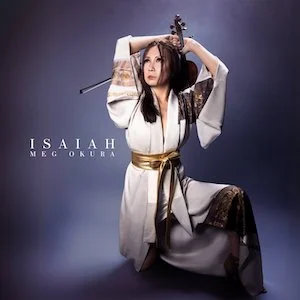
With her latest album, Isaiah, the expansively creative Japanese violinist and composer Meg Okura proves once again that she stands among today’s most distinctive musical visionaries. Rhythmically fluid and stylistically adventurous, the record represents contemporary world fusion at its most refined. A testament to her eclecticism and athletic command, the album showcases her acclaimed Pan Asian Chamber Jazz Ensemble in celebration of its 20th anniversary. The tentet’s unfettered explorations are amplified by a roster of distinguished guests who elevate the ensemble’s dynamics, arrangements, and interplay to a higher plane.

The exuberant fusion of “Sushi Gadol”, a tribute to Okura’s brother—who transitioned from heavy metal drummer to Protestant pastor—opens with prog-rock stamina embedded in its intricate theme before drifting into breezy chamber textures and eventually settling into a Brazilian-tinged groove. Flutist Anne Drummond engages in spirited exchanges with Okura, leading to a final thematic statement enriched by trumpet, bass clarinet, and guitar accents. “Blessing”, inspired by the Pre-Haftarah Blessing Okura and her daughter received, unfolds as a luminous waltz, featuring David Smith’s radiant trumpet lines, Sam Sadigursky’s subtle yet pertinent bass clarinet commentary, and Naomi Newsome’s ethereal vocalizations that shape a soulful atmosphere.

The infectious title track, “Isaiah”, thrives on funk, Japanese music, and African folk influences. Passages in seven later shift tempo, and there’s astute chromatic movements, pedal points, chamber episodes, and rampant swing thrusts supporting Remy Le Boeuf’s agile saxophone runs. “Rice Country” blends Japanese pop and folk with the American idioms of Aaron Copland, resulting in a kind of Benny Goodman-styled swing where the instruments converse with one another. The gracious “Sunset Bells” features guitar and trumpet solos over taut rhythms, finishing in an excellent chamber mode.

The influence of Michael Brecker is noticeable on “African Skies”, a piece drawn from his 1996 Impulse! album Tales from the Hudson, though Okura adapts it to her own style. Packed with detail, nuance, and deft rhythmic variation, the piece features Michael’s brother Randy Brecker on trumpet, as well as a delightfully outgoing piano solo by Brian Marsella. A different groove underpins the assertive discourses of violin and flute. “Jubberish” is a grooving, well-oiled 7/4 blues that lands on a solo violin passage, maintaining the septuple meter while exploring Arabian dance inflections that reward with inventiveness and rhythmic fire.

Okura’s meticulously assembled sonic layers are remarkable, and Isaiah is a multidimensional crossover journey that packs a punch, the product of the complex mind of a mature, original composer of enormous talent.

Favorite Tracks:
02 - Blessing ► 04 - Rice Country ► 06 - African Skies ► 07 - Jubberish


Meg Okura - Ima Ima

Label: Self produced, 2018

Personnel - Meg Okura: violin, vocals, erhu; Tom Harrell: trumpet; Sam Newsome: soprano sax; Sam Sadigursky: bass clarinet, clarinet; Anne Drummond: flutes; Riza Printup: harp; Rez Abbasi: guitar; Brian Marsella: piano, electric piano; Pablo Aslan: bass; Jared Schonig: drums.

meg-okura-ima-ima.jpg

Japanese violinist Meg Okura records for the fourth time with her Pan-Asian Chamber Ensemble, this time having first-rate improvisers Rez Abbasi and Tom Harrell in the roster, guitarist and trumpeter, respectively. Containing seven original compositions, the album Ima Ima put on view her lucid musical vision as she explores material across the world-fusion spectrum. Thus, it’s more than common to hear timeless Eastern melodies running over contemporary jazz arrangements.

Black Rain” is one of those cases, with the Japanese pentatonic scale integrating so well with the harmonic progression of the jazz classic “Invitation”. The inaugural Oriental enchantment that stems from violin, harp, and soprano, suddenly mutates to a bolero cadence that serves the individuality of pianist Brian Marsella.

Ima”, meaning mom in Hebrew and now in Japanese, is a phenomenal opening. The beautiful piano/flute and harp/soprano combinations create cinematic tension throughout the introductory section, which is subsequently deviated to a waltzing route varnished with sporadic swinging segments. Sopranist Sam Newsome energizes his impromptu statement with literate swoops and rhythmic focus.

Brimming contemporary vibes, “A Summer in Jerusalem” displays Israeli sounds through the self-disciplined combination of Okura’s violin and Pablo Aslan’s bowed bass. Sam Sadigursky makes you tap your feet to the cadence by wielding a powerful deep-toned groove in seven. This steams up polychromatic keyboard attacks and punchy rhythmic accents that emerge from Jared Schonig’s roiling drumming. A chamber passage, vaguely resembling “Concierto de Aranjuez”, jumps at us before the discerning improvisations from Harrell, Abbasi, and Okura, who also colors with her vocal chants. Everything is so gentle and exciting at the same time. The complex structure still encompasses a vamp that brings back the trumpeter and the violinist to the spotlight before the reinstatement of that rousing, groovy theme.
 
A Night Insomnia” is a sophisticated fusion feast. The band keeps groovin’ aplomb while embarking on a journey replete with smooth soul, funk, and ever-shifting rhythms that are constantly disrupted, just like the eight note figure that accompanies the song throughout. The violinist employs swift patterns and phrases to leap between registers, whereas Harrell swings and funks with a clever choice of notes. You’ll also hear improvisations from flute, bass clarinet, and soprano sax at the very end.

Reflective strings and woodwinds bring “Birth of Shakyamuni” to life. Sandwiched by moments of contrapuntal ostinato, Abbasi speeds up a concise yet highly articulated solo à-la Larry Coryell, contrasting with Sadigursky, whose tranquil melodies lead to a classy tango passage turned classical epic. The guitarist returns afterward for another supersonic intervention before a compelling flute incursion.

With the bandleader’s classically trained voice in evidence, “Blues in Jade” seems to explore the incorporeal. Conversely, “Tomiya” feels gleefully secular as it recreates the rhythm of a taiko drum ensemble. Elements of Japanese folk merge with jazz harmonies, shaping a gracious chamber jazz that lands on an uplifting Latinized vamp dominated by Harrell’s soloing aptitude. 

Ms. Okura was able to create magical crossover soundscapes with intimacy and subtlety, resorting to a pure lyricism and fascinating collective passages that never put the homogeneity of the whole into question.

       Grade A-

       Grade A-

Favorite Tracks:
01 – Ima ► 02 – A Night Insomnia ► 03 – A Night Insomnia