
Label: Out Of Your Head Records, 2026
Personnel - Anna Webber: tenor saxophone, flute; Sarah Rossy: synth, voice; Chiquita Magic: synth, voice; John Hollenbeck: drums, glockenspiel, composition.
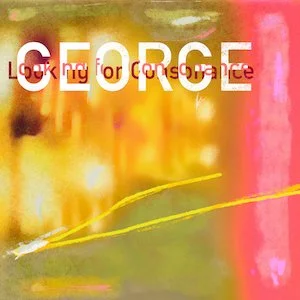
Claudia Quintet’s founder, John Hollenbeck, a fierce, focused, and highly innovative drummer and composer who often seems a step ahead of jazz’s vanguard, returns with his second album from the ensemble George—named after George Floyd—Looking For Consonance. The electro-acoustic group features synth players and vocalists Sarah Rossy and Chiquita Magic, alongside the exceptional saxophonist and flutist Anna Webber.
Difficult to categorize, the music traverses a postmodern landscape shaped by elements of synth-pop, electronica, idiosyncratic rhythmic designs, and open improvisation. “Bounce” is a striking ride that lands somewhere between eerie prog-metal and hallucinatory rave textures. Synchronized vocal lines, Hollenbeck’s explosive rhythmic foundation, and Webber’s menacing multiphonics and driving melodic force converge before dissolving into an extended, sustained drone.
The mercurial “Lewis”—dedicated to trombonist George Lewis—embraces shifting meters, incorporating synth-pop-rock passages in five, nimble septuple meter dances, and other intricate rhythmic cycles where the flute takes a central role. In contrast, “Nassam Alayna-Lhawa”, a composition by the Lebanese Rahbani Brothers, offers a gentle, diasporic expression of peace, delivered with clarity and warmth through Rossy’s Arabic vocals.
The ensemble’s revolutionary spirit peaks with “Norma”, a dark experimental piece built on saxophone–voice unisons and assertive rhythmic accents, and “George and Dee”, where strands of alternative synth-pop, new wave, and electronica-inspired experimentation evoke the legacy of artists like Gary Numan and Kraftwerk.
Hollenbeck infuses the album with layered rhythmic complexity throughout. Check out his work on “Porter”, where he lays down treacherous, counterintuitive undercurrents while ethereal vocal chants stay afloat. “Johnson”—a tribute to George F. Johnson—radiates a buoyant, groove-oriented energy, offering a more accessible nu-jazz moment, while “Wayne Phase”—a nod to Wayne Shorter—explores shifting intensities and stylistic breadth with a deep understanding of the honoree’s musical language and eclecticism.
Richly detailed, Looking For Consonance, may prove challenging for casual listen. Still, the group’s fluid command of odd meters and genre-crossing expression ultimately feels organic, inviting listeners to yield to its intricate rhythmic and improvisational allure.

Favorite Tracks:
01 - Bounce ► 04 - George and Dee ► 07 - Norma

