
Co Streiff / Russ Johnson Quartet - Oracle

Label: Sunnyside Records, 2026

Personnel - Co Streiff: alto saxophone; Russ Johnson: trumpet; Christian Weber: double bass; Gerry Hemingway: drums.
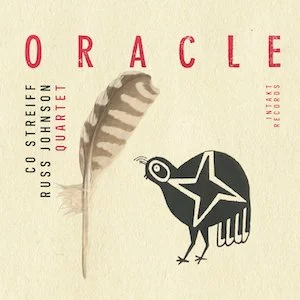
Swiss saxophonist Co Streiff and American trumpeter Russ Johnson join forces once again on Oracle, a six-track date where both bring their imaginative, open compositions to the fore. 15 years after In Circles, the pair—backed by the cooperative rhythm team of bassist Christian Weber and seasoned drummer Gerry Hemingway (replacing Julius Sartorius)—is back in action. Despite the recording hiatus, the band got together in 2019, developing further ties that culminated in a 2023 tour.

Johnson’s “Horizontal Heartburn”, initially a vehicle for Hemingway’s balance of dry and wet toms and syncopated hi-hat pulsation, follows with dramatic shifts in urgency, tension, and release. A staccato-driven section pumped up with unison horn lines soon morphs into a lyrically conscious theme contoured by tone-center shifts. Johnson’s noble way of articulating phrases is substantiated over sturdy bass plucks, and the piece soon engages in marching steps, leading to a frantic final dance.

Streiff’s “Smithy Street” invites us to a funk-rock groove, perfectly suitable for measured avant-garde considerations. The saxophonist also contributes “Remember Little Feather”, a free-bop swing ride where she adds clever motifs, taking us to Ornette Coleman and Don Cherry. The tempo rises to double time for Johnson’s adrenaline-infused statement, with Hemingway stealing the spotlight at the end as he embarks on climactic rhythmic tapestries overflowing with interesting ideas.

While the final track, “Oracle”, offers a creatively bluesy atmosphere, Johnson’s “Sanguache” comes shrouded in a cool vibe enhanced by nonchalant parallel melodies and a strong, hi-hat-accentuated backbeat. This tune preserves its lyrical side even when the band makes a somewhat unexpected turn into rock. One of the strongest pieces consists of a combination of Streiff’s “In Circles”, first recorded on the previous album, and Johnson’s “Yellow Crane”. Warm bluesy colors, a breezy tone, and an uncluttered rhythmic texture emerge with a 3/4 feel. Weber’s excellent skills and attention to detail make the transition to the chamber-jazz painterliness of the second tune, which enters in reflection mode with foundational bowed bass maneuvers.

Oracle provides an effective sonic canvas, showcasing the distinctive chemistry between these two leaders and the depth of what they can create together.

Favorite Tracks:
01 - Horizontal Heartburn ► 03 - In Circles / Yellow Crane ► 05 - Remember Little Feather


Kendrick Scott Oracle - A Wall Becomes a Bridge

Label: Blue Note Records, 2019

Personnel - John Ellis: saxophones, clarinets, flute; Mike Moreno: guitars; Taylor Eigsti: piano; Joe Sanders: bass; Kendrick Scott: drums; Jahi Sundance: turntables.

kendrick-scott-wall-becomes-bridge.jpg

A Wall Becomes a Bridge is the fourth offering from American drummer/composer Kendrick Scott and his working group Oracle. It's a positive sequel to his previous We Are the Drum (2015), also released on the Blue Note Records. Even haunted by fears and insecurities while in the process of writing music for this new effort, Scott was able to put a commendable record together with the help of his bandmates. The album’s title certainly refers to that complicated phase, but also has political connotations, alluding to the drummer's dissatisfaction regarding the presidency of his country.

The album was produced by bassist Derrick Hodge and features a core of extraordinary musicians, including the fascinating guitarist Mike Moreno, Scott’s longer-lasting collaborator, adaptable saxophonist/clarinetist John Ellis, flexible pianist Taylor Eigsti, and rock-solid bassist Joe Sanders. Scott also hired turntablist DJ Jahi Sundance on shorter interlude-like pieces, typically inclusive of syncopated hip-hop treatments, vocal samples, and atmospheric instrumentation as they explore a new genre hybridization. As a result of this particular selection, I picked the chamber-esque “Windows” as a highlight, one of the two pieces co-written with Hodge.

The bandleader’s hypnotic drumming also embodies hip-hop vibes on “The Catalyst”, where Moreno brings forth a sophisticated guitar sound and language that nod to Metheny and Rosenwinkel alike. His instrument also illuminates the soul-stirring “Voices”, which blends the gentle, measured aesthetics of Tomasz Stanko and Tord Gustavsen, but also brings something of Rosenwinkel’s “Zhivago” in the melody and ambiance. This composition was the promptest response to the drummer’s insecurities and, ironically, Scott is all confidence here, firing up formidable drum fills with magnitude and authenticity.

Whether it is the waltzing flow of the Hodge-penned “Don Blue”, the emotionally-charged environment of the Strayhorn-ish ballad “Becoming”, or the enigmatic sound waves caused by the bass clarinet on Aaron Parks’ 7/4 “Nemesis”, the musicians show they’re comfortable and digging every move. Moreover, even the slower tunes flirt with vibrancy.

Eigsti’s “Mocean” is another example of narrative devotion and strong communication as Scott’s pounding bass drum kicks lead the way. The rich solo section features the pianist’s fleet-fingered articulation and Ellis’ expressive fire on the clarinet. The group wraps up with the charming “Archangel”, lustrously portrayed in 3/4 and embraceable of Moreno’s acoustic sounds.

Inviting the listener to his sonic world, Scott deserves kudos for turning the difficulties into a positive outcome.

Grade A-

Grade A-

Favorite Tracks:
02 - Mocean ► 04 - Voices ► 11 - Nemesis