
Label: Northern Spy Records, 2026
Personnel - Jeremy Cunningham: drumset, percussion, piano, Rhodes, organ, vibes, electronics; Jeff Parker: guitar; Josh Johnson: alto saxophone, electronics; Dustin Laurenzi: guitar, synth, programming, tenor saxophone; Matt Gold: guitar, bass, pandeiro; Greg Uhlmann; guitar, electronics; Will Miller: Rhodes, electronics; Sen Morimoto: vocals; Lia Kohl; cello; Paul Bryan: bass, electronics; Lane Beckstrom: bass; Makaya McCraven: drumset, vibes.
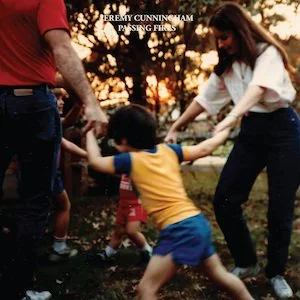
Jeremy Cunningham is an alert and versatile multi-instrumentalist based in Chicago since 2009. I was very well impressed with his previous outing, A Better Ghost (2022), featuring a few members who reappear on Passing Fires, namely saxophonists Dustin Laurenzi and Josh Johnson, bassist Paul Bryan, and trumpeter-turned-keyboardist Will Miller. Other illustrious guests here include guitarists Jeff Parker and Matt Gold, and sophisticated drummer Makaya McCraven. Instead of fixed formats, Cunningham favors a rotation of musicians who have an ear for careful sonic detail.
The album has a very personal feel to it, evolving as a meditation on love, loss, memory, and change. Two of the strongest pieces are "To The Sky" and "Kobi Shobi". While the former holds a wonderful collective bossa groove, featuring the multi-faceted Matt Gold on guitar, bass, and pandeiro, Cunningham on Rhodes, McCraven's soulful drumming, and Japanese-American Sen Morimoto's ethereal, wordless vocal work, the latter is unexpectedly edgy, bolstered by funk throbs and a jazzy hip-hop vibe that takes us to A Tribe Called Quest and Digable Planets. Johnson's snaky alto solo boosts the energy over the syncopated guitar comping offered by Parker.
Also filled with joy and aplomb, "Union Pier" is a compelling 3/4 duo piece that pairs Cunningham on drum set and percussion with Laurenzi, who, besides tenor—on which he offers a fluid improvisation—also injects guitar, synth, and percussion. "Beyond the Veil" is a 4/4 pop/rock piece with rounded harmonic contours and a graceful melody, featuring McCraven on vibes, and Parker, who claims the spotlight while injecting deep feeling into his impromptu statement. He also appears on the pop-meets-R&B "Some Days”.
Bryan's six-beat funky groove stretches into asymmetry and a different figure on "Galloway Street", which welcomes guitarist Greg Uhlmann and shines a spotlight on Johnson's effect-drenched alto solo. The album closes in a Sade-like sophisti-pop style with "Somewhere To Be", featuring Morimoto's smooth styling.
Cunningham's compositions have a strong emotional arc, and that quality rings true in the music. Melding jazz-imbued improvisation into different stylistic frameworks, Passing Fires works as an escape from traditional jazz moves.

Favorite Tracks:
03 - To The Sky ► 06 - Kobi Shobi ► 10 - Galloway Street

