
Gabriel Vicéns - Niebla

Label: Clepsydra Records, 2026

Personnel - Gabriel Vicéns: guitar; Roman Filiu: alto saxophone; Vitor Gonçalves: piano; Rick Rosato: bass; E.J. Strickland: drums; Victor Pablo: percussion.
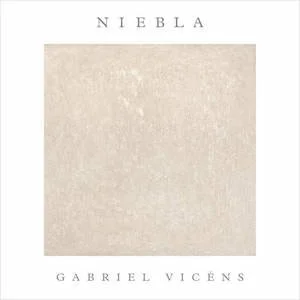
Niebla is the fifth album by New York-based Puerto Rican guitarist and composer Gabriel Vicéns, who reunites the core lineup from his 2021 release The Way We Are Created. The multifaceted sextet features Cuban saxophonist Roman Filiu, bassist Rick Rosato, drummer E.J. Strickland, and percussionist Victor Pablo, with Brazilian pianist Vitor Gonçalves stepping in for Glenn Zaleski. Across nine strong originals, Vicéns draws on Afro–Puerto Rican bomba and plena rhythms, auteur cinema, and painting as sources of inspiration.

Stylistically varied, the album opens with the vaguely introspective “El Fin de La Noche”, the first of three understated, acoustic guitar-driven pieces placed at the beginning, middle, and end of the record, all shaped with elegance and subtlety. On the title track, “Niebla”, Vicéns switches to electric guitar and ventures into more aggressive terrain, highlighted by contrapuntal saxophone lines and a slightly offbeat groove shared by piano, bass, and drums. Modern in scope and rich in harmonic color, the piece bears a spiky edge reminiscent of the leaping melodic contours of Austrian composer Anton Webern. Vicéns’ solo unfolds with chromatic nuance and intervallic boldness, while Filiu’s saxophone balances fluidity with fragmentation. Vibrant percussive attacks toward the end help ground the piece decisively.

Vejigante”, inspired by a Puerto Rican folkloric figure, unfolds in an odd meter, opening with a compelling patterned dialogue between guitar and saxophone. Silence plays an active role, and a floating midsection explores meditative rubato exchanges before the original groove returns in support of Gonçalves’s animated piano statement. The 15-minute “Ramaje” centers on an engrossing riff within a five-beat framework. Filiu’s solo brims with invention, followed by Strickland’s drum feature that leads into serene passages marked by stillness and ambiguity. A sweeping solo percussion section drawing on the Cuban güiro tradition concludes the piece in vamping mode.

Guaiza”, informed by the piano music of Morton Feldman, creates a seductive atmosphere over a tight groove, featuring a resonant bass solo and motivic guitar explorations. The uptempo “Stray Dogs” takes its cue from Tsai Ming-liang’s film and the changui rhythm from Guantánamo, Cuba. The band excels in crisp unison lines, dynamic motion, and sharp accentuation, with Vicéns and Filiu trading vivid ideas in an intense musical conversation. Latin inflections become especially pronounced during the piano solo.

With deep command of tone, originality, and risk, Vicéns gets you hooked in contemporary compositions that, not fixed in tradition, breathes and invigorates in equal measure, revealing a composer firmly in control of his evolving artistic voice.

Favorite Tracks: 
02 - Niebla ► 03 - Vejigante ► 07 - Guaiza ► 08 - Stray Dogs
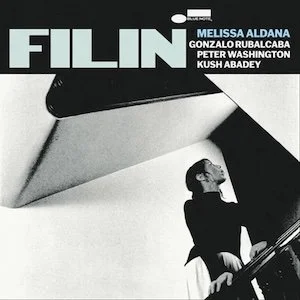

Melissa Aldana - Filin

Label: Blue Note Records, 2026

Personnel - Melissa Aldana: tenor saxophone; Gonzalo Rubalcaba: piano; Peter Washington: bass; Kush Abadey: drums + Guest - Cecile McLorin Salvant: vocals (#3,5).

Chilean-born saxophonist and composer Melissa Aldana has long expressed the desire to record a ballads album in the tradition of John Coltrane and other masters. She fulfills that intention with her new quartet—Gonzalo Rubalcaba on piano, Peter Washington on bass, and Kush Abadey on drums—while adding a distinctive twist: the repertoire is devoted exclusively to Filin songs, a US-influenced Cuban style popular from the late 1940s to the early 1960s. Filin, her third release as a leader on Blue Note Records, contains moments of genuine romanticism, though it does not consistently deliver the spark or sense of discovery that might make the material fully compelling.

The album opens with a confident reimagining of Salvador Levi’s “La Sentencia”, where the delicacy of touch in the rubato piano playing and the velvety saxophone establish an inviting mood. The melodies, shaped with a soulful warmth à-la Charles Lloyd, rest securely on Washington’s rounded, supportive bass lines and Abadey’s soft brushes-on-snare and cymbal legato. “No Te Empeñes Más” introduces guest vocalist Cécile McLorin Salvant, whose expressive delivery enhances the piece, alongside heartfelt solos from Aldana and Rubalcaba. Salvant also appears on “Las Rosas No Hablan”, written by Brazilian samba master Cartola, rendered in graceful Spanish and sustained by the quartet’s refined accompaniment.

Brazilian presence is further felt through “Little Church” by Hermeto Pascoal, one of the album’s highlights. The piece moves between soulful lyricism and spacious dimensions, with Aldana’s saxophone projecting an almost ethereal glow over Rubalcaba’s sensitive pianism and Abadey’s subtle rhythmic commentary. “Imágenes” and the closing “No Pidas Imposibles” unfold as languid meditations, the former marked by Aldana’s wistfully dark yet airy tone, the latter distinguished by Rubalcaba’s exquisite grace.

Aldana’s unique musical habitat—where passages coalesce with discretion and often in predictable contours—finds particular resonance in “Ocaso”, composed by Mexican guitarist Claudio Estrada. The main melody has a dark feel to it, while the final vamping pulse comes injected with a disengaged, almost unconcerned air. 

Yet while the musicianship is consistently polished here, Aldana’s artistic voice tends to resonate more vividly to me when she channels her creativity into her own original compositions.

Favorite Tracks:
01 - La Sentencia ► 05 - Las Rosas No Hablan ► 06 - Little Church


Hery Paz - Jardineros

Label: 577 Records, 2023

Personnel - Hery Paz: saxophone, flute, piano, suona; Román Díaz: percussion, voice; Francisco Mela: drums.

With an uncanny ability to mix freedom and substance, the Cuban-born, New York-based multi-instrumentalist and painter Hery Paz surprises and enchants at every step of his new recording, one that evokes his fascinating, rich and complex cultural identity. Jardineros is a powerful statement made in the company of two fellow countrymen with advanced percussive skills - Román Díaz and Francisco Mela.

The two-minute opener, “Calle Libertad”, is based on the Cuban traditional rhythm Danzón. It throws agile folk-soaked flute lines on top of the deep, resonant tones of Diaz’s bonkó enchemiya drum. Paz embraces the duo format on two other ocasions, both with Mela, who makes use of his diverse drum-sound palette: “Arroyo Lajas”, which, adopting a free jazz posture, showcases Paz’s sturdy tenor sound and breathtaking language; and “Miel de la Tierra”, which merges Cuban folklore and unchained expression with a bright sense of vitality. By switching from flute to saxophone, the bandleader fires up the infectious avant-garde jazz foray that concludes the latter piece.

Jardineros” is set in motion with crisp alignments between sax and flute, lively drum sounds, and cymbal shimmering. On this cut, calls and responses are triggered by a numbered series of symbolic drawings, but it’s the coiling tenor lines that seem to be in command, straddling between motivic chants and avant-jazz diffusion. Totally different timbres come to the fore on “Conga Espirituana”, where Paz plays two suonas simultaneously, a traditional double-reed Chinese instrument that gives the music a strange Eastern spell. It floats right above the percussive haze of Afro-Cuban rhythms in an evocation of spiritual roots and nature.

Comunión”, an instrumental marked by irresistible interplay, displays syncopated conga cadences, restrained drumming, and focused tenor blows. It contrasts with the two numbers that accommodate lyrics - “El Real de las Palmas” was written by Diaz, who also provides a wonderful narration of the text. Paz’s piano work - sometimes abstract, sometimes mysterious - runs in the background. In turn, “Barrio del Jobo” was penned by Paz, and captures the nostalgia for his land and family.

Upending the jazz world with a multi-cultural vision that goes beyond the conventional, Paz is a musical force to be reckoned with.

Favorite Tracks:
02 - Jardineros ► 03 - Arroyo Lajas ► 06 - Miel de la Tierra
